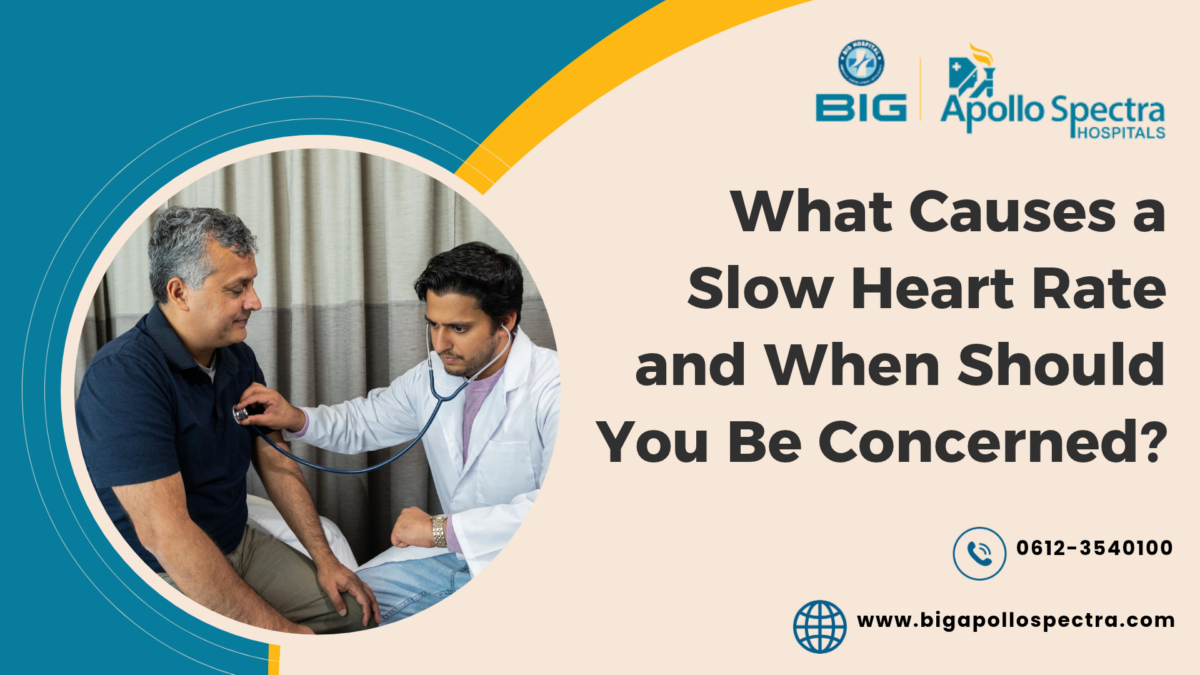
Bradycardia is the medical term for a heart rate that is too slow, meaning the heart beats fewer times per minute than it should when a person is at rest. A lower heart rate isn’t always a problem, especially when sleeping or among physically fit people.
On the contrary, if your heart is beating unusually slow and you’re feeling dizzy, faint or weak, it might be a sign of an underlying medical condition.
In this blog, you are given various causes of slow heart rate, signs to be aware of and situations in which a medical check up is needed.
What Is Considered a Slow Heart Rate in Adults?
In adults, a slow heart rate is generally referred to as bradycardia, with a resting pulse of under 60 beats per minute (BPM). Nevertheless, having a low pulse does not necessarily mean that there is a heart problem.
Harmless physiological bradycardia can occur in fit or healthy people and during sleep, whereas clinically significant bradycardia may occur when the heartbeat is too slow to supply enough blood and oxygen to the body’s organs or when there is an underlying heart rhythm disorder.
The significance of a low heart rate depends on the symptoms, personal medical history, the type of medicines one is taking, the heart’s electrical activity and how well the heart is functioning in terms of blood circulation.
Not every case of low pulse necessarily requires treatment. Still, residents of Patna who have unexplained low readings alongside symptoms such as dizziness, unusual fatigue or fainting should seek proper medical assessment at a cardiology hospital in Patna.
What Causes a Slow Heart Rate?
Heart rate can drop in a condition that’s quite harmless (physiological), or in a medical condition.
It is very important to find out the exact reason, because if the heart rate is caused by a physiological reason or a drug then no treatment is necessary, whereas if it is due to some abnormalities in the heart’s electrical conduction system then it needs to be treated.
A few causes for a slow heartbeat, like medication effects or thyroid conditions, get resolved and managed much more easily compared to persistent conduction disease.
The section below briefly describes the causes.
1. Naturally Low Heart Rate During Sleep or Physical Fitness
In a healthy person, the heart rate can drop to a much lower level at rest, especially during sleep, when the parasympathetic nervous system is more active.
This can also explain why an athlete who has been doing endurance sports may have a much lower resting pulse, as a trained heart can pump blood efficiently with fewer beats per minute.
If your pulse is low and you’re not experiencing any symptoms, it is often not a cause for concern. However, this is also why two people with the exact same heart rate may be facing very different situations.
2. Medications That Slow Down the Heartbeat
Certain medications that can slow down the heart rate include beta blockers, certain calcium channel blockers (such as verapamil and diltiazem), and digoxin.
These drugs might be prescribed to treat high blood pressure, arrhythmias, or other heart related issues.
Even if a person’s heart rate is low, they should not stop taking their medication or change the dosage without consulting their doctor first.
In some cases, what the doctor may do to address a low heart rate is simply adjust the prescribed medication or its dosage.
3. Problems With the Heart’s Electrical Conduction System
The beating of the heart is controlled by electrical signals.
Heart conditions like sinus node dysfunction, in which the heart’s natural pacemaker generates electrical signals more slowly than normal, and atrioventricular (AV) block, characterised by delayed or interrupted electrical conduction between the upper and lower chambers of the heart, can result in a slow heart rate.
In some cases, the heartbeat may slow down to such a degree that the brain does not receive enough blood, leading to symptoms such as dizziness or loss of consciousness.
4. Age Related Changes in the Sinus Node
Ageing can cause changes in the sinus node, the heart’s natural pacemaker, due to fibrosis and changes in electrical signalling, which may affect normal impulse generation.
Older people may experience persistent or occasional episodes of a slow heart rate due to sinus node dysfunction.
Since these changes often develop slowly and gradually, symptoms may initially be mild or subtle, although some people may not experience any symptoms at all.
5. Hypothyroidism and Electrolyte Imbalances
An underactive thyroid causes the body’s metabolism to slow down and can also slow the heart rate.
Abnormal potassium levels and other significant electrolyte imbalances can disrupt the heart’s normal rhythm.
Blood tests can help identify or rule out thyroid problems and electrolyte imbalances. Treating these underlying conditions may help improve the heart rate if they are responsible for the problem.
6. Sleep Apnoea and Other Underlying Medical Conditions
Obstructive sleep apnoea can lead to episodes in which the heart rate slows down during sleep.
Low oxygen levels, as well as changes in the activity of the autonomic nervous system, can play a role in causing these heart rhythm abnormalities.
Certain infections and damage to the heart muscle or its electrical conduction system, such as after a heart attack, may also affect the heart rate. Whether treatment is required or not mainly hinges upon uncovering the primary cause.
How Can You Tell If a Slow Heart Rate Is Dangerous?
Bradycardia becomes worrying when your heart rate is too slow to provide enough blood to the brain and other vital organs.
Dizziness, light headedness, unusual fatigue, shortness of breath, reduced capacity for physical activity and fainting can be symptoms of bradycardia.
These symptoms might occur occasionally, so you may not always notice them when getting your heartbeat checked.
A smartwatch or fitness tracker reading alone cannot diagnose bradycardia or an underlying heart condition.
A heart checkup package in Patna may provide useful baseline information about cardiovascular health, but if you are experiencing symptoms of bradycardia, it is better to consult a doctor for symptom directed assessments and appropriate heart rhythm tests.
One single reading does not tell the whole story. What matters is the symptoms, heart rhythm and overall health of the person.
When Should You Seek Medical Help for a Slow Heart Rate?
Urgency depends on accompanying symptoms and their severity, so it helps to know which signs call for an emergency response and which allow a scheduled appointment.
Seek emergency help immediately for:
- Chest pain, severe breathlessness or fainting
- Sudden confusion, severe weakness or collapse
Arrange a medical consultation for:
- Recurrent light headedness with low pulse readings
- Persistent unexplained fatigue or reduced exercise tolerance
- Repeated unusually low readings, especially after medication changes
- New symptoms in people with existing heart disease
A simple, painless ECG and appropriate medical assessment can help identify the underlying cause and guide the next steps.
Bradycardia Care at Big Apollo Spectra Hospital
Big Apollo Spectra Hospital in Patna provides specialist cardiac consultation with a patient centred approach. Cardiologists assess bradycardia by reviewing symptoms, medical history, current medications and pulse patterns.
Where clinically appropriate, investigations such as ECG, Holter monitoring and blood tests help establish the cause. The findings then show whether observation, medication adjustment, management of an underlying condition or further cardiac care is appropriate, and not every patient will need a pacemaker or admission.
Coordinated, multidisciplinary assessment at a super speciality hospital in Patna supports advanced, evidence based cardiac care without promising specific outcomes. If you are worried about a slow pulse, the aim is simply to understand what it means for you.
Conclusion
Having a slow heart rate doesn’t always mean something is wrong with your heart.
For some people a slow heart rate may be a normal physiological finding while for others it can be a sign of an underlying cardiac or medical condition.
What matters is how you feel and what the rhythm shows, not the number on a screen.
Recurrent dizziness, unexplained fatigue and fainting should never be ignored; seek timely evaluation if they develop. Recognising changes early and seeking appropriate care puts you in a strong position to stay well.
If you’re unsure what your pulse readings mean, a cardiology consultation at Big Apollo Spectra Hospital, Patna, can help you find out.